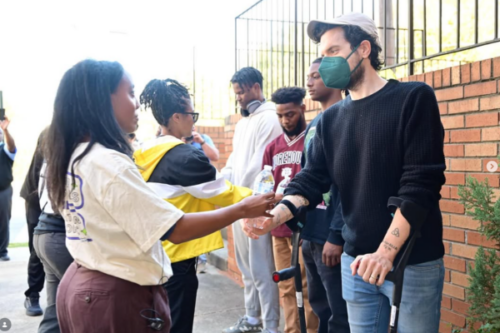
New Disabled South believes in fully accessible public and community infrastructure. Accessible public infrastructure includes physical buildings, pedestrian travelways, and public transit.
New Disabled South believes that all public transit should be physically and geographically accessible as well as financially affordable for all people.
New Disabled South also believes that all physical infrastructure should be fully accessible, including linguistically. Accessible physical infrastructure also includes equitable access to stable, affordable, and legally compliant housing, which encompasses public, private, and communal housing.
New Disabled South believes access to phone service (landline and/or cellular), internet service, or other vital telecommunications services and tools should be accessible regardless of financial means and geographic location. We support enhanced encryption protections for telecommunication services, and all other communications, while rejecting the invasions of privacy by surveillance capitalism and the growing police state.
New Disabled South also believes in the importance of community infrastructure. Community infrastructure is the way that local groups of people form interdependent community networks that provide mutual aid and support, access to resources, and collective care. New Disabled South refers to these networks as Care Webs. We support the development of Care Webs by acting as a policy advocate, resource generator, connector, convener, platform provider, and trainer rather than builder or centralized direct service provider.